Jesus’ resurrection and the profound experience with the Holy Spirit set about a ‘hermeneutical revolution’ for the apostles. They suddenly had new eyes to reread and reinterpret the Old Testament from the perspective of the Story of Jesus. Acts 13:32-33 “We tell you the good news: What God promised our ancestors he has fulfilled for us, their children, by raising up Jesus.” The apostles declare the whole story of Jesus as gospel. Peter reads a Bible (OT) that leads him to see God at work guiding the Story of Israel into the Story of Jesus. True gospeling that conforms to the apostolic gospel leads directly to who Jesus is (as the conclusion of the Israel/humanities story) and summons people to respond in faith, repentance, and baptism.

Showing posts with label Christian Living. Show all posts
Showing posts with label Christian Living. Show all posts
Monday, 2 January 2012


Thursday, 22 December 2011
TKJG Chapter 6: The Gospel in the Gospels
The early Christians called Matthew, Mark, Luke and John the ‘gospel’ because they are the gospel! The story of Jesus. To call these books the gospel is precisely to express that Jesus himself, the entirety of his acting, teaching, living, rising, and remaining with us is the ‘gospel.’ The four gospels and the gospel are one. The story told in Mark calls hearers to belief in the person who is described in it, Jesus, the Messiah and Son of God, and thus to eternal life; in other words it seeks to be wholly and completely a message of salvation. Luke’s purpose is not merely to narrate the deeds and words of Jesus but to show how these did in fact lead to the experience of salvation and to the formation of the community of the saved. John shows how the principle institutions and feasts of Israel, those annual celebrations that told Israel’s Story and that shaped both memory and identity for every observant Jew, fin their own completion in Jesus. These Gospels do not arrange the story into our way of framing the plan of salvation, and neither do they format the story into our favourite method of persuasion. Instead they declare the Story of Jesus, and that story is the saving, redeeming, liberating story.
TKJG Chapter 5: How Did Salvation Take Over the Gospel?
The creeds articulate what is both implicit and explicit in Paul’s grand statement of the gospel in 1 Corinthians 15. Thus, the gospel is the Story of Jesus as the completion of the Story of Israel as found in the Scriptures, and that gospel story formed and framed the earliest Christians. During the much needed and God ordained Reformation, salvation was clarified in regards to its personal application and necessity. What then happened overtime is that the apostolic gospel was reframed in such as way and so successfully (largely as a result of the powerful evangelistic culture of evangelicalism in American revivalism and then later in America’s culture war between fundamentalists and modernists), that today we are losing contact with the gospel culture.
Tuesday, 20 December 2011
Advent 4
Advent is a four week season that provides is with the opportunity to celebrate the excitement, anticipation and sense of expectation that comes with Christmas.
Not excitement and anticipation because of all the trappings of Christmas that most of us are largely familiar with – Santa sacks, presents, sweet treats, family fun, festivities, fine food, indulgence, holidays, summer, BBQ’s and all those things we associate with a Kiwi Christmas. As good as what they all might be (and obviously this things can all be distorted to actually take away from Christmas rather than add to it), this isn’t what we get excited about during Advent and at Christmas.
The excitement, celebration and anticipations centres on the coming of Jesus...

External to our efforts, to our striving, to our will power, to our best intentions, and New Year’s resolutions we celebrate that a new chapter has begin in Jesus Christ. All we have to do is get lost and found in the story of Jesus.
That’s what a Christian is, that’s what a Christ follower is someone who’s whole life is caught up and shaped by God’s big story and the life changing work of Jesus Christ in coming and making a new chapter possible for all humanity.
Not excitement and anticipation because of all the trappings of Christmas that most of us are largely familiar with – Santa sacks, presents, sweet treats, family fun, festivities, fine food, indulgence, holidays, summer, BBQ’s and all those things we associate with a Kiwi Christmas. As good as what they all might be (and obviously this things can all be distorted to actually take away from Christmas rather than add to it), this isn’t what we get excited about during Advent and at Christmas.
The excitement, celebration and anticipations centres on the coming of Jesus...
· Jesus’ coming 2000 years ago
· Jesus’ desire to come and work in our lives today
· Jesus’ coming to restore and to put all things right
Often in our 21st Century context we wait until the New Year to turn over a new leaf, to enter a new chapter in life. Today isn’t they day for that, no way. LOL. But somehow the transition from the 31/12 to 01/01 is the time! Now we’ll lose weight, get fit, take up a hobby, give up a vice, read the bible every day, make church attendance a weekly habit, quit smoking or whatever it might be. Now is the moment to summon our will power, our mental reserves, to get committed, to find an accountability partner, to psyche oneself up, to turn a new page, starts a new chapter and begin a new life!
It’s a bit crazy that we wait to the 31st December to do this, but it kind of makes sense.
The Christian New Year isn’t January 1 though. The Christian New Year, the Christian Liturgical Calendar, kick starts the New Year at the end of November, the fourth Sunday before Christmas. That’s when we say happy New Year.
Here though we don’t hope that the New Year will bring a new chapter and a different story into reality in our life; we celebrate with excitement and anticipation that a new chapter has begun and will continue to be!

External to our efforts, to our striving, to our will power, to our best intentions, and New Year’s resolutions we celebrate that a new chapter has begin in Jesus Christ. All we have to do is get lost and found in the story of Jesus.
ADVENT – A new chapter is coming, let’s get ready, let’s celebrate.
CHRISTMAS – A new chapter has begun.
CHRISTMAS – A new chapter has begun.
That’s the excitement and anticipation of Advent and of Christmas, there is a new chapter in the story, a new chapter in the story of humanity and there can be a new chapter in the story of my life as well. And that new chapter is here today!
Lost – found
Brokenness and strife – something beautiful
Despair, anxiety, hopelessness – peace, confidence and hope
Pain and heartache – healing and restoration
Brokenness and strife – something beautiful
Despair, anxiety, hopelessness – peace, confidence and hope
Pain and heartache – healing and restoration
We sing about this in some of our Christmas carols...
O Holy Night
Long lay the world in sin and error pining.
Till He appeared and the Spirit felt its worth.
A thrill of hope the weary world rejoices,
for yonder breaks a new and glorious morn.
Till He appeared and the Spirit felt its worth.
A thrill of hope the weary world rejoices,
for yonder breaks a new and glorious morn.
In all our trials born to be our friends
He knows our need, our weakness is no stranger.
He knows our need, our weakness is no stranger.
Truly He taught us to love one another,
His law is love and His gospel is peace.
Chains he shall break, for the slave is our brother.
And in his name all oppression shall cease.
Joy to the World
No more let sins and sorrows grow,
Nor thorns infest the ground;
He comes to make His blessings flow
Far as the curse is found,
Far as the curse is found,
Far as, far as, the curse is found.
ADVENT – A new chapter is coming, let’s get ready, let’s celebrate.
CHRISTMAS – A new chapter has begun.
His law is love and His gospel is peace.
Chains he shall break, for the slave is our brother.
And in his name all oppression shall cease.
Joy to the World
No more let sins and sorrows grow,
Nor thorns infest the ground;
He comes to make His blessings flow
Far as the curse is found,
Far as the curse is found,
Far as, far as, the curse is found.
ADVENT – A new chapter is coming, let’s get ready, let’s celebrate.
CHRISTMAS – A new chapter has begun.
BAPTISM – we’ve entered into a new story.
We’ve put our faith and trust in Jesus, we’ve turned from living life our own way and we’ve chosen to live in the light of God’s big story, to get lost and found in God’s big story. We die with Christ and we are raised to new life with Christ!That’s what a Christian is, that’s what a Christ follower is someone who’s whole life is caught up and shaped by God’s big story and the life changing work of Jesus Christ in coming and making a new chapter possible for all humanity.
Look forward to the possibility of a new chapter in your life this Advent.
Celebrate the dawning of a new day, of a new chapter, because of Jesus this Christmas.
Put your faith and trust in Jesus, turn to follow him as King, enter a new chapter in Baptism.
Celebrate the dawning of a new day, of a new chapter, because of Jesus this Christmas.
Put your faith and trust in Jesus, turn to follow him as King, enter a new chapter in Baptism.
TKJG Chapter 4: The Apostolic Gospel of Paul
1 Corinthians 15 is the best place to begin mapping an understanding of the gospel. Here Paul comes pretty close to defining the word gospel. The gospel is to announce good news about the key events in the life of Jesus and to shout aloud the Story of Jesus Christ as the saving news of God. The gospel though is intimately tied to Israel’s Story as found in the scriptures of the Old Testament. Salvation – the robust salvation of God – is the intended result of the gospel story about Jesus Christ that completes the story of Israel in the Old Testament.
1 Corinthians 15 (TNIV)
PART A
1 Now, brothers and sisters, I want to remind you of the gospel I preached to you, which you received and on which you have taken your stand. 2 By this gospel you are saved, if you hold firmly to the word I preached to you. Otherwise, you have believed in vain. (15:1-2)
PART B
3 For what I received I passed on to you as of first importance: that Christ died for our sins according to the Scriptures,
4 that he was buried,
that he was raised on the third day according to the Scriptures, 5 and that he appeared to Cephas, and then to the Twelve.(15:3-5)
PART C
20 But Christ has indeed been raised from the dead, the firstfruits of those who have fallen asleep. 21 For since death came through a human being, the resurrection of the dead comes also through a human being. 22 For as in Adam all die, so in Christ all will be made alive. 23 But in this order: Christ, the firstfruits; then, when he comes, those who belong to him. 24 Then the end will come, when he hands over the kingdom to God the Father after he has destroyed all dominion, authority and power. 25 For he must reign until he has put all his enemies under his feet. 26 The last enemy to be destroyed is death. 27 For he “has put everything under his feet.” Now when it says that “everything” has been put under him, it is clear that this does not include God himself, who put everything under Christ. 28 When he has done this, then the Son himself will be made subject to him who put everything under him, so that God may be all in all. (15:20-28)
1 Corinthians 15 (TNIV)
PART A
1 Now, brothers and sisters, I want to remind you of the gospel I preached to you, which you received and on which you have taken your stand. 2 By this gospel you are saved, if you hold firmly to the word I preached to you. Otherwise, you have believed in vain. (15:1-2)
PART B
3 For what I received I passed on to you as of first importance: that Christ died for our sins according to the Scriptures,
4 that he was buried,
that he was raised on the third day according to the Scriptures, 5 and that he appeared to Cephas, and then to the Twelve.(15:3-5)
PART C
20 But Christ has indeed been raised from the dead, the firstfruits of those who have fallen asleep. 21 For since death came through a human being, the resurrection of the dead comes also through a human being. 22 For as in Adam all die, so in Christ all will be made alive. 23 But in this order: Christ, the firstfruits; then, when he comes, those who belong to him. 24 Then the end will come, when he hands over the kingdom to God the Father after he has destroyed all dominion, authority and power. 25 For he must reign until he has put all his enemies under his feet. 26 The last enemy to be destroyed is death. 27 For he “has put everything under his feet.” Now when it says that “everything” has been put under him, it is clear that this does not include God himself, who put everything under Christ. 28 When he has done this, then the Son himself will be made subject to him who put everything under him, so that God may be all in all. (15:20-28)
Monday, 19 December 2011
TKJG - Chapter 3: From Story to Salvation
The gospel only makes sense in the context of the full narrative of Christian scripture; if we ignore this larger story the gospel gets distorted. But that full narrative is not the gospel. The gospel is the story of Jesus as the resolution of Israel’s (humanities) story. This story includes how someone is ‘saved’ but any personal plan for or of salvation in itself is not the gospel and becomes a distortion of the gospel. God’s righteousness and holiness, our sin, Christ’s atoning death, and our response of repentance and faith in Jesus is not the gospel. A salvation plan leads to justification. The gospel though includes salvation but leads to discipleship, justice, goodness and loving kindness.
Thursday, 15 December 2011
The King Jesus Gospel
I've just started reading The King Jesus Gospel by Scot McKnight. The forewords are from N.T. Wright and Dallas Willard.

Here are snippets of what they have to say...
N.T. Wright
God wants every single Christian to grow up in understanding as well as trust, the Christian faith has never been something that one generation can sort out in such as way as to leave their successors with no work to do.
We shouldn't be alarmed if someone sketches a third, fourth, or even fifth dimension that we had overlooked. (This is in regards to our understanding of Christianity and Christian faith).
The movement that has long called itself "evangelical" is in fact better labelled "soterian."
"The gospel" is the story of Jesus of Nazareth told as the climax of the long story of Israel, which in turn is the story of how the one true God is rescuing the world.
For many people, "the gospel" has shrunk right down to a statement about Jesus' death and its meaning, and a prayer with which people accept it. That matters, the way the rotor blades of a helicopter matter. You won't get of the ground without them. But rotor blades alone make a helicopter.
This book could be one of God's ways of reminding the new generation of Christians that it has to grow up to take responsibility for thinking things through afresh, to look back to the large world of the full first-century gospel in order then to look out on the equally large world of twenty-first-century gospel opportunity.
Dallas Willard
Scot McKnight here presents, with great force and clarity, the one gospel of the bible and of Jesus the King and Savior. He works from the basis of profound biblical understanding and of insight into history and into the contemporary misunderstandings that produce gospels that do not normally produce disciples, but only consumers of religious goods and services. In the course of this he deals with the primary barrier to the power of Jesus' gospel today - that is, a view of salvation and of grace that has no connection with discipleship and spiritual transformation. It is a view of grace and salvation that, supposedly, gets one ready to die, but leaves them unprepared to live now in the grace and power of resurrection life.
It would probably be worth your while getting a copy of the book and having a read don't you think?

Here are snippets of what they have to say...
N.T. Wright
God wants every single Christian to grow up in understanding as well as trust, the Christian faith has never been something that one generation can sort out in such as way as to leave their successors with no work to do.
We shouldn't be alarmed if someone sketches a third, fourth, or even fifth dimension that we had overlooked. (This is in regards to our understanding of Christianity and Christian faith).
The movement that has long called itself "evangelical" is in fact better labelled "soterian."
"The gospel" is the story of Jesus of Nazareth told as the climax of the long story of Israel, which in turn is the story of how the one true God is rescuing the world.
For many people, "the gospel" has shrunk right down to a statement about Jesus' death and its meaning, and a prayer with which people accept it. That matters, the way the rotor blades of a helicopter matter. You won't get of the ground without them. But rotor blades alone make a helicopter.
This book could be one of God's ways of reminding the new generation of Christians that it has to grow up to take responsibility for thinking things through afresh, to look back to the large world of the full first-century gospel in order then to look out on the equally large world of twenty-first-century gospel opportunity.
Dallas Willard
Scot McKnight here presents, with great force and clarity, the one gospel of the bible and of Jesus the King and Savior. He works from the basis of profound biblical understanding and of insight into history and into the contemporary misunderstandings that produce gospels that do not normally produce disciples, but only consumers of religious goods and services. In the course of this he deals with the primary barrier to the power of Jesus' gospel today - that is, a view of salvation and of grace that has no connection with discipleship and spiritual transformation. It is a view of grace and salvation that, supposedly, gets one ready to die, but leaves them unprepared to live now in the grace and power of resurrection life.
It would probably be worth your while getting a copy of the book and having a read don't you think?
Thursday, 8 December 2011
Advent 3
Thanks Giving
Fourth Thursday in November, a holiday celebrated in the states. First celebrated by in 1621 by the first pilgrims arriving in New England (America) from England. It was a meal to thank God for their save arrival. Traditionally meals like that held to thank God for harvests or deliverance etc. Became a national annual practice in 1863, instituted by Abraham Lincoln after the Civil War. Beautiful. Wonderful. Let’s have a meal and thank God for his blessings, favour and protection, for family and loved ones and freedom and hope.
Black Friday
Black Friday is the Friday that follows on from the Thursday of Thanks Giving. Traditionally it is the beginning of the Christmas shopping season and there are normally massive sales to get people into the shopping ‘spirit.’ Not a traditional holiday but many no-retail employees give their staff the day off. Black Friday because shops are in the ‘black,’ in the profit zone.
Shops used to open early, 6:00am on Black Friday. This has been evolving over the last few years though with many starting to open first at 5:00am but now at 4:00am. In 2011 though stores such as Target, Massey’s and Best Buy decided to open at midnight. Walmart though opened on Thanks Giving at 10:00pm and Toys’R’Us at 9:00pm.
Reports regarding Black Friday shopping include...
Surely not the way things are meant to be at Christmas time.
How do we flick from Thanks Giving to Black Friday just like that?
As we approach the third Sunday of Advent, Gaudete Sunday, a Sunday of rejoicing, we engage in re-telling the Christmas story. To ourselves and each other.

Christmas isn’t about over indulgence. Christmas isn’t about pressure to give and buy things you can’t afford. Christmas isn’t about the cultural expectations of the Western world’s obsession with consumerism and materialism. Christmas isn’t about credit card debt that lasts for months the other side of Christmas.
Christmas is a celebration of the coming of the one who sets us free from debt, the one who brings grace, forgiveness, freedom and peace on earth!As Christ followers we are challenged to re-tell the story.
Jesus says...
Matthew 6:31
31 So do not worry, saying, ‘What shall we eat?’ or ‘What shall we drink?’ or ‘What shall we wear?’ 32 For the pagans run after all these things, and your heavenly Father knows that you need them. 33 But seek first his kingdom and his righteousness, and all these things will be given to you as well.
Yet at Christmas we so often find ourselves asking ‘what shall we eat and drink and wear and get and have?’
This year remember to seek first the kingdom of God.
The manger was a surprising place to find a king. Always at Christmas I am surprised that God shows up in unexpected places, like the doco we watched at church on Sunday “What Would Jesus Buy?”
Look for Jesus to speak and to challenge and to encourage and love in unexpected ways this Christmas season as you focus an align yourself with the ‘reason for the season.”
Don’t make your entry point to Christmas the craziness of shopping malls and bargain hunting and unfettered consuming.
Make your entry point the one who came to ‘make his blessings flow, far as the curse was found, as far as the curse was found’!
Fourth Thursday in November, a holiday celebrated in the states. First celebrated by in 1621 by the first pilgrims arriving in New England (America) from England. It was a meal to thank God for their save arrival. Traditionally meals like that held to thank God for harvests or deliverance etc. Became a national annual practice in 1863, instituted by Abraham Lincoln after the Civil War. Beautiful. Wonderful. Let’s have a meal and thank God for his blessings, favour and protection, for family and loved ones and freedom and hope.
Black Friday
Black Friday is the Friday that follows on from the Thursday of Thanks Giving. Traditionally it is the beginning of the Christmas shopping season and there are normally massive sales to get people into the shopping ‘spirit.’ Not a traditional holiday but many no-retail employees give their staff the day off. Black Friday because shops are in the ‘black,’ in the profit zone.
Shops used to open early, 6:00am on Black Friday. This has been evolving over the last few years though with many starting to open first at 5:00am but now at 4:00am. In 2011 though stores such as Target, Massey’s and Best Buy decided to open at midnight. Walmart though opened on Thanks Giving at 10:00pm and Toys’R’Us at 9:00pm.
Reports regarding Black Friday shopping include...
· Police taser a shopper in an Alabama Wal-Mart amidst a scramble for bargains
· Bomb scare, police evacuate an Arizona Wal-Mart after finding an explosive.
· 55 year old woman shot by robbers outside Wal-Mart in North Carolina.
· Girls got into a punching fight at a Pennsylvania Victoria’s Secret
· Grandfather knocked unconscious in another mal
· Man charged with disorderly conduct after brawl in electronics section of another store which left two woman injured
· In 2008 a security guard was crushed to death as 200 shoppers stormed a store for bargins
SURELY THAT’S NOT THE WAY IT IS SUPPOSED TO BE EVER!Surely not the way things are meant to be at Christmas time.
How do we flick from Thanks Giving to Black Friday just like that?
As we approach the third Sunday of Advent, Gaudete Sunday, a Sunday of rejoicing, we engage in re-telling the Christmas story. To ourselves and each other.

Christmas isn’t about over indulgence. Christmas isn’t about pressure to give and buy things you can’t afford. Christmas isn’t about the cultural expectations of the Western world’s obsession with consumerism and materialism. Christmas isn’t about credit card debt that lasts for months the other side of Christmas.
Christmas is a celebration of the coming of the one who sets us free from debt, the one who brings grace, forgiveness, freedom and peace on earth!As Christ followers we are challenged to re-tell the story.
Jesus says...
Matthew 6:31
31 So do not worry, saying, ‘What shall we eat?’ or ‘What shall we drink?’ or ‘What shall we wear?’ 32 For the pagans run after all these things, and your heavenly Father knows that you need them. 33 But seek first his kingdom and his righteousness, and all these things will be given to you as well.
Yet at Christmas we so often find ourselves asking ‘what shall we eat and drink and wear and get and have?’
This year remember to seek first the kingdom of God.
The manger was a surprising place to find a king. Always at Christmas I am surprised that God shows up in unexpected places, like the doco we watched at church on Sunday “What Would Jesus Buy?”
Look for Jesus to speak and to challenge and to encourage and love in unexpected ways this Christmas season as you focus an align yourself with the ‘reason for the season.”
Don’t make your entry point to Christmas the craziness of shopping malls and bargain hunting and unfettered consuming.
Make your entry point the one who came to ‘make his blessings flow, far as the curse was found, as far as the curse was found’!
Saturday, 3 December 2011
Advent - Part 2
During Advent we reflect with anticipation, excitement and hope on the coming of the Messiah. We contemplate the birth narratives of the gospels and the expectation of the Jewish people longing for Messiah. What must life have been like for them? What did the coming of Messiah mean for them? What does the coming of Jesus mean for me and for my family and community (local and global)? We look at areas in our own lives where we are in need of Jesus to presence himself and bring light and hope. We look at the world we live in and its brokenness and need of the Divine Saviour. We smile confidently rather than despair. There is hope. There is a new chapter that had begun, is beginning and will take place.
However we wait.
We wait.
Still waiting.
Yep even now, still waiting.
Waiting isn’t something we are always good at. Advent is about pregnant expectancy. As glamorous as that might sound and as exciting as it might be to have a new baby on the way (we’re counting down to the arrival of our third), pregnancy is full on. Ask any mum!

Morning sickness, aches and pains, hard to breath, hard to get around, hard to carry on with life, tired, exhausted, emotional and so on. Yet a mum pushes on with a smile on her face.
Often that’s what our waiting in life is like, we’re confident, we’re smiling, we have hope, but... When’s this going to end? How much longer do I have to wait? I feel terrible, Jesus where are you? I need you now! This world needs you now!
Advent though encourages us not to shy away from this waiting but rather to be still, to be at peace, to trust God in the midst of our waiting. We don’t wait hopelessly though. We wait knowing that Christmas is coming.
However we wait.
We wait.
Still waiting.
Yep even now, still waiting.
Waiting isn’t something we are always good at. Advent is about pregnant expectancy. As glamorous as that might sound and as exciting as it might be to have a new baby on the way (we’re counting down to the arrival of our third), pregnancy is full on. Ask any mum!

Morning sickness, aches and pains, hard to breath, hard to get around, hard to carry on with life, tired, exhausted, emotional and so on. Yet a mum pushes on with a smile on her face.
Often that’s what our waiting in life is like, we’re confident, we’re smiling, we have hope, but... When’s this going to end? How much longer do I have to wait? I feel terrible, Jesus where are you? I need you now! This world needs you now!
Advent though encourages us not to shy away from this waiting but rather to be still, to be at peace, to trust God in the midst of our waiting. We don’t wait hopelessly though. We wait knowing that Christmas is coming.
- Waiting slows us down
- Waiting gives us time and space to gain perspective
- Waiting helps us to discriminate between the good, the better and the best
- Too easy to go through live without pausing. To caught up in life that without realising it we’re all of a sudden following the wrong star.
- Christmas becomes about consumables, candy canes, stocking fillers, over indulgence, a fat man in a red suit – all those things we love and we lose sight of ‘Christ with us.’
- Same can happen in life, we go so fast, move so quickly from one thing to the next that we forget that this life is about so much more than this life.
- If we do not learn to wait, we can allow ourselves to assume that one thing really is as good as another. Just not the case.
Advent, when we engage in the season, relieves us of our commitment to the frenetic fast-paced norms of our world.
It slows us down. It makes us think. It makes us look beyond today to the great ‘tomorrow’ of life, where Jesus restores all things and there are no more tears, pain, or heartache.
And while we wait we remember we are invited to work towards that end!
We’re not to get caught up in the pursuit of chocolate Santa’s, socks, undies, candy canes and i-presents, but rather the pursuit of justice and peace.
We’re to get caught up in the story of Jesus and the mission of Jesus in the world. Allowing that story to reframe the story of our lives.
Friday, 2 December 2011
Advent - Part 1
The Liturgical Year
The Liturgical Year or the Christian Calendar is a way of ordering one’s year that has evolved within Christian tradition over the centuries. Different Christian traditions follow slightly different forms of the calendar with different readings from the bible on different days etc, but in general they all follow the same rhythm.
The way the Liturgical Year works is that it is ordered around the story of Jesus, his life and ministry and longed for return. Its beauty is that it takes us places in prayer, contemplation, study, and celebration that often we might more naturally shy away from. Christmas is a wonderful celebration. Resurrection Sunday is a day of new life and possibility. Pentecost reminds us of the life giving empowerment of the Holy Spirit. They are pretty easy to celebrate.
Lent though reminds us of the trials and struggles of life; the difficulties and the heartaches. Easter Friday takes us to place of what seems to be abandonment and hopelessness. Ordinary time confronts us with the mundane reality of life but that Christ is present.

The real power of the liturgical year is not the feasts, celebrations, seasons and rituals, the real power is its capacity to touch and plumb the depths of the human experience, to stir the human heart. By walking the way of the life of Jesus, by moving into the experience of Jesus, we discover the meaning of our own experiences, the undercurrent of our own emotions, the struggle and the joy, the victories and the heartache of the Christian life. By taking us into the depths of what it means to be a human on the way to God – to suffer and to wonder, to know abandonment and false support, to believe and to doubt – the liturgical year breaks us open to the divine.
Advent
Advent isn’t Christmas. Advent is the four week period leading into Christmas which begins on the fourth Sunday before Christmas. Advent looks forward to the arrival of Christ, the arrival of Emmanuel, God with Us, the hope of the world.
Advent looks forward to the arrival of the Christ child whose birth brings joy to the world. With Mary we magnify God’s name at the announcement that the long promised one is coming soon. Our waiting is full of pregnant expectancy, waiting in anticipation for the full coming of God’s reign of peace. The liturgical colour is blue, signifying hope and the dawning of a new day.
Advent is also an opportunity to re-tell the Christmas story, away from of consumerism and materialism, and back towards anticipation, expectation and the wonder of the incarnation, of God with us, of the long waited arrival of the Messiah in very unspectacular circumstances. Advent is the celebration that there is going to be a new chapter in the story; hope, life, promise, redemption, grace, forgiveness.
Advent from Latin essentially means ‘coming’ but Advent is not about one coming but rather three.
The Liturgical Year or the Christian Calendar is a way of ordering one’s year that has evolved within Christian tradition over the centuries. Different Christian traditions follow slightly different forms of the calendar with different readings from the bible on different days etc, but in general they all follow the same rhythm.
The way the Liturgical Year works is that it is ordered around the story of Jesus, his life and ministry and longed for return. Its beauty is that it takes us places in prayer, contemplation, study, and celebration that often we might more naturally shy away from. Christmas is a wonderful celebration. Resurrection Sunday is a day of new life and possibility. Pentecost reminds us of the life giving empowerment of the Holy Spirit. They are pretty easy to celebrate.
Lent though reminds us of the trials and struggles of life; the difficulties and the heartaches. Easter Friday takes us to place of what seems to be abandonment and hopelessness. Ordinary time confronts us with the mundane reality of life but that Christ is present.

The real power of the liturgical year is not the feasts, celebrations, seasons and rituals, the real power is its capacity to touch and plumb the depths of the human experience, to stir the human heart. By walking the way of the life of Jesus, by moving into the experience of Jesus, we discover the meaning of our own experiences, the undercurrent of our own emotions, the struggle and the joy, the victories and the heartache of the Christian life. By taking us into the depths of what it means to be a human on the way to God – to suffer and to wonder, to know abandonment and false support, to believe and to doubt – the liturgical year breaks us open to the divine.
Advent
Advent isn’t Christmas. Advent is the four week period leading into Christmas which begins on the fourth Sunday before Christmas. Advent looks forward to the arrival of Christ, the arrival of Emmanuel, God with Us, the hope of the world.
Advent looks forward to the arrival of the Christ child whose birth brings joy to the world. With Mary we magnify God’s name at the announcement that the long promised one is coming soon. Our waiting is full of pregnant expectancy, waiting in anticipation for the full coming of God’s reign of peace. The liturgical colour is blue, signifying hope and the dawning of a new day.
Advent is also an opportunity to re-tell the Christmas story, away from of consumerism and materialism, and back towards anticipation, expectation and the wonder of the incarnation, of God with us, of the long waited arrival of the Messiah in very unspectacular circumstances. Advent is the celebration that there is going to be a new chapter in the story; hope, life, promise, redemption, grace, forgiveness.
Advent from Latin essentially means ‘coming’ but Advent is not about one coming but rather three.
- Coming of Jesus, 2000 years ago, the Messiah, Emmanuel, the Saviour.
- Coming of Jesus, as present in our everyday lives today, working in all sorts of beautiful and wonderful ways.
- Coming of Jesus again to put all things right, to restore all things and to bring justice and shalom.
Jesus – past, present, future!
Thursday, 1 December 2011
Spiritual Disciplines or Not Spiritual Disciplines
Don Carson at the Gospel Coalition offers a pretty narrow view of what constitute as and what don't constitute as spiritual disciplines. Essentially he narrows them to bible reading and prayer. I'm more broad in my appreciation of what could be considered a 'spiritual discipline.'
You can read his thoughts and rationale here = D.A Carson 'Spiritual Disciplines'
The point of this post is not to get into a debate or argument with Carson on the issue but rather to offer a different opinion and give you something to think on in regards to what may or may not work as a spiritual discipline in your life i.e. a practice that leads to spiritual growth and development as a Christ follower in areas of right believing, right affections and right living.

My comments on Carson's article...
I think Carson presents a very narrow few of how God can and does work in the lives of His people and of the practices which His people can engage in that as spiritual disciplines, lead to spiritual growth.
You can read his thoughts and rationale here = D.A Carson 'Spiritual Disciplines'
The point of this post is not to get into a debate or argument with Carson on the issue but rather to offer a different opinion and give you something to think on in regards to what may or may not work as a spiritual discipline in your life i.e. a practice that leads to spiritual growth and development as a Christ follower in areas of right believing, right affections and right living.
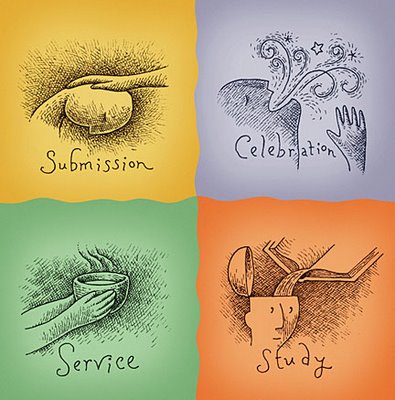
My comments on Carson's article...
I think Carson presents a very narrow few of how God can and does work in the lives of His people and of the practices which His people can engage in that as spiritual disciplines, lead to spiritual growth.
Yes spirit, spiritual, spirituality are notoriously fuzzy words. There has been massive debate about Christian Spirituality and how that can possible be defined for many years.
I don’t think 1 Cor 2:14 or 1 Cor 3:1 are references to intrinsic reality of humanities make up as created in the image of God, but rather to the regenerate state of certain individuals/communities. There is a big difference.
I love the gospel and I’m not nervous about the language of ‘spiritual disciplines’ extending itself into all sorts of arenas, such as Bible reading, meditation, worship, giving away money, fasting, solitude, fellowship, deeds of service, evangelism, almsgiving, creation care, journaling, missionary work, and more. Popular use may divorce them from specific doctrine Christian or otherwise, but Christian use should always anchor them in the grand narrative of scripture. Indeed I concur with Carson that in general they will only increase one’s ‘spirituality’ with the presence of the Holy Spirit, all being that they are likely still good practices in character development even apart from a recognised knowledge of God.
I think plenty can be listed as a spiritual discipline without being particularly mentioned in Scripture, i.e. despite the bible saying precious little (debatable!) about creation care and chanting mantras.
Yes of course the disciplines can be done for disciplines sake and do not necessarily make one holier than another. When done with an openness to the Spirit they certainly create space to hear from God though, to re-orientate one’s life around the Way of Jesus and to help one grow healthy.
One of my main points of contention is that I would disagree with Carson and 100% assert that Christian responsibilities can and should be labelled as spiritual disciplines. The very running of one's Christian race 1 Cor 9:24-27 (towards orthodoxy, orthopathy and orthopraxy) is exercise in itself. Any movement towards right(eous) living, towards clothing oneself or taking off the old self and putting on the new self Eph 4:22-24, is exercise, discipline, a pressing on, which leads to what can only be described as ‘spiritual growth.’ This does not mean there is nothing special about prayer and the reading of God’s Word, indeed not all disciplines are equal, though all can be healthy. In some seasons people need to lean more into some disciplines than others. Likewise, this does not mean that one is sucked into thinking that growth in spirituality is but conformity to rules. The very acts of creation care, giving away money and fellowship (when truly engaged in, in a disciplined and committed manner) demand growth in love, trust, understanding of the ways of God and the work of the Spirit in filling and empowering us. All practices which can help us in our journey of sanctification, conformity to Jesus Christ and spiritual maturation.
What would you class or not class as a spiritual discipline? What disciplines do you practice that have lead to life in the Spirit and growth in the things of God?
Further reading try...
Grace and peace
Wednesday, 7 September 2011
Integrity and Mission
Integrity is a key to unlocking the power of the gospel.[1] The Oxford English Dictionary defines integrity as: “Soundness of moral principle; the character of uncorrupted virtue, honesty, sincerity.” For Paul and Peter, a Christ-like life is one of integrity, for the moral imagination is shaped by Christology which informs a Christians virtues and sincerity (1 Th. 1:6; 4:1-2; 1 Pet. 2:21-25). In today’s “yeah, right!” society, where cynicism and scepticism are ubiquitous, integrity appears to be the only antidote to such vices, as a faithful presence disarms such toxic attitudes.[2] And this is no more an issue now, than it was when early Christianity first began, as the writing known as 2 Clement testifies:
2 Clement 13:3 For when the pagans hear from our mouths the oracles of God, they marvel at their beauty and greatness. But when they discover that our actions are not worthy of the words we speak, they turn from wonder to blasphemy, saying that it is a myth and a delusion.[3]
This is seen in the recent offering on apologetics by John Stackhouse, who devotes some space to the issue of integrity. He writes, “bad behaviour discredits the gospel, while good behaviour adorns and so commends it.”[4] Stackhouse goes on to make the claim that, “Augustine, for example, testifies that he was converted by the integrity and charity of other people, not merely by their Christian intelligence.”[5] Hauerwas notes that our “preaching depends on the recovery of the integrity of the Christian community.”[6] In our fractured and oft noted “postmodern”[7] environment, at stake is not always “what is true?” But rather, “who can be trusted?” This is illustrated by Nietzsche who said, “I’m not upset because you lied to me, I’m upset because I don’t trust you anymore.”[8] This is illustrative of the results of a failure in integrity, or a lack of integrity to begin with. Following Nietzsche’s critique of metanarratives, and truth claims in general, he viewed these as nothing but “the will to power.” The consequences are the same, a lack of trust in the person, and therefore especially the ideas, philosophy or beliefs they are espousing. In such a climate, it is only through faithful presence of integrity that credibility can be restored.[9]
Integrity must provide the context in our various relationships through which we announce the gospel in words. Actions motivated by a care, concern and commitment to the well-being and benefit of others, not self, prompted by the activity of God in our own hearts and communities gives us integrity. However, this is not our aim. Our aim is, according to 1 Thessalonians, to please God and to live worthy of Him. That is our focus. It just so happens that a by-product of such a focus and intention, will give us the needed credibility to proclaim his message to others. As Guder notes, “it has to do with worthy living, with the character of our corporate life and the ways in which it provides evidence of the healing work of God's love, before a watching world.”[10]
[1] Integrity is an essential topic in current discussions of missiology, so much so that it had a day of discussions devoted to it at the recent Lausanne gathering in, Cape Town, South Africa.
[2] See Integrity in the Public and Private Domains. Edited by Alan Montefiore and David Vines (New York: Routeldge, 1999) for a collection of essays that seeks to address this from a philosophical and pragmatic basis.
[3] Translation by M. W. Holmes, The Apostolic Fathers: Greek Texts and English Translations 3rd Edition (Michigan: Baker, 2007). It is unfortunate that Holmes has translated “ta; logia to:u qeou:” as “the oracles of God” when a more straightforward translation would render it “the word of God” and thus bring to memory that this is a reference to gospel proclamation, as in 1 Thess 1:8, etc.
[4] John G. Stackhouse, Humble Apologetics: defending the faith today (Oxford: OUP, 2002), 135.
[5] Idem. Stackhouse then goes on to note 1 Peter 3:13-16 and quotes philosopher Linda Trinkhaus Zagzebski as saying, “The experience of knowing holy people is still the most important evidence to me for the truth of Christianity.”
[6] Stanley Hauerwas and William H. Willimon, Resident Aliens (Nashville: Abingdon Press, 1989), 99.
[7] It is interesting that for Jean-Frangois Lyotard, The Postmodern Condition: A Report on Knowledge (Minneapolis: University of Minnesota Press, 1984), xxiv, postmodernity is an “incredulity towards metanarratives.” This was due to the lack of trust in the Enlightenment project, but that is because the integrity of their claims could not be substantiated or fulfilled. This has led to the collapse of knowledge in man philosophical quarters. However, this has led to a widespread incredulity towards any metanarratives, mainly because they are now viewed as suspect and lacking integrity due to various plays for power.
[8] Frederick Nietzsche, Beyond Good and Evil (Edited and Translated by Judith Norman; Cambridge: CUP, 2002), aphorism 183.
[9] This seems to be part of the argument of James Davison Hunter, To Change the World: The Irony, Tragedy, and Possibility of Christianity in the Late Modern World (Oxford: OUP, 2010), who uses the category of “faithful presence” as the focus of our missional endeavours. See the Christianity Today Interview with Christopher Benson, downloaded 22 June 22, 2010: http://www.christianitytoday.com/ct/2010/may/16.33.html “Faithful presence is not about changing culture, let alone the world, but instead emphasizes cooperation between individuals and institutions in order to make disciples and serve the common good. ‘If there are benevolent consequences of our engagement with the world,’ Hunter writes, ‘it is precisely because it is not rooted in a desire to change the world for the better but rather because it is an expression of a desire to honour the creator of all goodness, beauty, and truth, a manifestation of our loving obedience to God, and a fulfilment of God's command to love our neighbour.’”
[10] Darrell L. Guder, “From Mission and Theology to Missional Theology” Princeton Seminary Bulletin XXIV:1 (2003), 36-54, here, 53.
Thursday, 14 July 2011
Bursting Bubbles of Individualism
God created humankind as social beings. This is not an accident, a mistake, or a result of the fall. We are created in the image of the triune God who is relational to the core, existing in a loving and ever deferring dance of community; Father, Son, and Spirit.

Western individualism is an expression of humanities broken, marred, sinful nature. Ultimately it is rooted in selfishness but it also finds momentum as people shy away from relationship as a result of offense, abuse, and the negative experiences everybody goes through in relationships. When brokenness encounters brokenness, as people come together in relationship, there is always the potential for fireworks that are not always positive and life giving.
One of the incredible attractions of individualism is its ability to create an island or a bubble of self-existence. An individual who lives a self focussed life (or at best, a nuclear family focussed life), can set up a fence, a wall, a boundary that keeps whatever is happening in the rest of the world out. It also makes it possible to live unaware of what is happening in the rest of the world. When the wall or the fence is higher enough, it is possible in our western context to truly live the 'good life.' One can eat, drink and be merry with little and even no consideration for others.
The relational triune God created and invited humanity into relationship with God and each other. Sin stuffed it all up. The relational triune God came in the flesh, incarnate, in order to make relationship with God and each other possible again. The gospel, the cross, Jesus Christ bursts bubbles of individualism. The gospel challenges us to think communally and live communally. It challenges us to live in loving, deferring, generous relationship with each other and the rest of the created order, out of our restored and loving relationship with God. The bubble is burst. The island has been bridged. The fence and the wall have been torn down.
This changes everything.
One can no-longer hide from the pain, heartache, injustice, needs and challenges that face our neighbours, our workmates, and our global community. One cannot ignore the reality of the brokenness in the world, hide away from it, or deny it. Escapism is not an option. Rather one is invited to partner with the Spirit’s work in the world to bring healing, restoration and life! The challenge is enormous, the adventure life long, the reward incredible.
With the help of the Spirit when brokenness encounters brokenness, as people come together in relationship, there is the potential for healing, love and true life to be found.
Resist the pull to build walls of individualism and isolation around your life. The sense of protection is false. The bliss of ignorance a deception.
Embrace life relationally and communally, be the kind of person you were created to be. Help restore that which is broken.

Western individualism is an expression of humanities broken, marred, sinful nature. Ultimately it is rooted in selfishness but it also finds momentum as people shy away from relationship as a result of offense, abuse, and the negative experiences everybody goes through in relationships. When brokenness encounters brokenness, as people come together in relationship, there is always the potential for fireworks that are not always positive and life giving.
One of the incredible attractions of individualism is its ability to create an island or a bubble of self-existence. An individual who lives a self focussed life (or at best, a nuclear family focussed life), can set up a fence, a wall, a boundary that keeps whatever is happening in the rest of the world out. It also makes it possible to live unaware of what is happening in the rest of the world. When the wall or the fence is higher enough, it is possible in our western context to truly live the 'good life.' One can eat, drink and be merry with little and even no consideration for others.
The relational triune God created and invited humanity into relationship with God and each other. Sin stuffed it all up. The relational triune God came in the flesh, incarnate, in order to make relationship with God and each other possible again. The gospel, the cross, Jesus Christ bursts bubbles of individualism. The gospel challenges us to think communally and live communally. It challenges us to live in loving, deferring, generous relationship with each other and the rest of the created order, out of our restored and loving relationship with God. The bubble is burst. The island has been bridged. The fence and the wall have been torn down.
This changes everything.
One can no-longer hide from the pain, heartache, injustice, needs and challenges that face our neighbours, our workmates, and our global community. One cannot ignore the reality of the brokenness in the world, hide away from it, or deny it. Escapism is not an option. Rather one is invited to partner with the Spirit’s work in the world to bring healing, restoration and life! The challenge is enormous, the adventure life long, the reward incredible.
With the help of the Spirit when brokenness encounters brokenness, as people come together in relationship, there is the potential for healing, love and true life to be found.
Resist the pull to build walls of individualism and isolation around your life. The sense of protection is false. The bliss of ignorance a deception.
Embrace life relationally and communally, be the kind of person you were created to be. Help restore that which is broken.
Monday, 13 June 2011
Living out the Incarnation
John 1 tells us of the Logos, the Word, through whom all things were made, life Himself… then it takes a twist - the Word became flesh and dwelt among us! The incarnation of Jesus is one of the most beautiful and mysterious beliefs of the Christian Church. It messes with our view of how an all powerful Being should act (a god that lowered itself, took on limitation, suffered at the hands of its own creation!?!?!)

But letter covered predators aside, what can the Incarnation mean for our practice as Christians? The repercussions of how followers of the Incarnate God should live are equally unsettling… and inspiring. What is our response to the radical action of God? How as communities do we live in light of His becoming one of us?
First, we should acknowledge that Christian praxis (how we practice or live) is always messy, contextual and falls well short of the clean and clear cut world of ideas. But this doesn’t mean that throwing around ideas is pointless, just limited. I have always found that a helpful framework is the concept of trajectory... the most helpful question could be ‘In which direction does the incarnation point us?’ Where does it lead us? To whom and at what cost?
Without getting too specific or attempting to make concrete definitions of somewhat controversial words such as ‘need’, ‘poor’ ‘broken’, (just trying to keep this a blog post, not a thesis) the broad trajectory of the incarnation is downwards! Obviously, and very importantly ‘downwards’ is not a reference to value but to advantage. Jesus calls us not to create communities wallowing in the blessed glory of our own loveliness post-Christ but communities that act out His story, enter dark places to shed His light and refuse to grasp status (Phil 2) but instead continue to offer ourselves to ‘flesh out’ the gospel.
The concept of the trajectory of incarnation allows some space for some of the variables (context, calling, season, available resource, present needs of others, community) without denying that there should be a recognisable shape to our Christian practice – that we use any advantage we have been given to bring wholeness to the brokenness of others.
Communities of Incarnation enter the stories of others that they have no cultural obligation to and are willing to suffer with, on behalf of and sometimes at the hands of others in need. To me one of the most difficult but important implications of ‘living incarnationally’ is that it implies going beyond simply giving from a distance, instead calling us to enter the worlds of a people and share in their story. Giving money or segments of time are one thing… living out the nitty gritty alongside others is another thing altogether.
Anyways, this post is long enough already… I’ll throw around some risks and opportunities in a future post
Chur
Subscribe to:
Posts (Atom)